
I Thought I Hated Journaling…Until I Made It My Own
I used to think I hated journaling. But here’s the thing, I didn’t hate writing itself. I hated all the rules around it. Maybe it started years ago when I had to track food, every symptom, every mood. Or maybe it’s that old fear from childhood, that someone would peek and read my secrets. (Though, full disclosure, I did keep a diary as a kid, so maybe it’s just a classic kid thing. Haha.)
I’ve always had a deep love (kinda obsession) of office supplies, pens, journals, pretty notebooks, but as an adult in the healing world it felt like journal, journal, journal. And while I know journaling has amazing benefits (science backs it up!), I’d start for a few days and stop. I’d have separate journals for different things and still…nothing stuck.
I tried the before-bed “brain dump” experiment, but I couldn’t put it away once I went to bed. I do well with journaling during courses or trainings with prompts, but my brain processes so much that the pen can’t keep up sometimes. Anyone else have a very active brain? I actually process a lot verbally, so I’ve found walks with my recorder on my phone can be more effective than writing. But it’s winter and welllll it’s super freaking cold out there.
Even when I do journal, I rarely go back to read it, unless I stumble on an old one. I’ve tried structured practices like “Journal Speak” for chronic health, and while they’re brilliant, they didn’t quite land for me. Rage on a page? Helpful. But I’d start and stop. There’s so much support out there, “Morning Pages”, gratitudes, structured journaling, but nothing ever felt fully right.
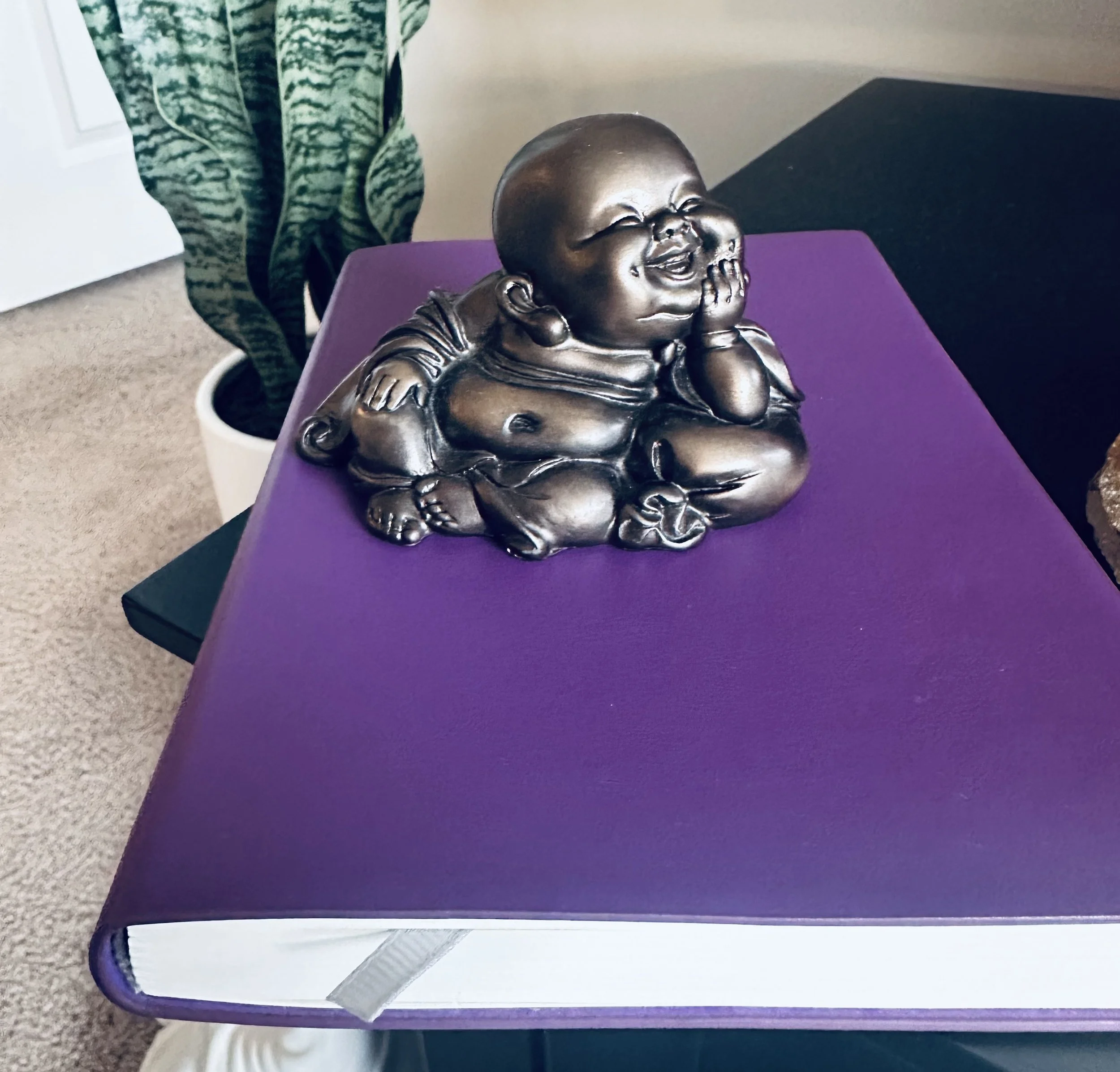
Then I decided to try something different. I bought a super pretty purple journal set (linked here) and made a simple, flexible practice for myself: after my morning breathwork and tapping, I write whatever’s on my mind. Anger, sadness, worry, confusion, excitement, whatever is ready to be released. No timing, no rules, no pressure. I don’t destroy it, but that’s always an option if I need the cathartic release.
Then I list three things I’m grateful for right now, and three things I’m grateful for that I’m calling in for the future. That’s it. Simple. And yet, it’s made a huge shift in my day. Sometimes I’ll revisit it later if something needs processing, but usually I leave it for the next morning.
I realized my busy brain just needs somewhere to land, but it doesn’t need a rigid routine. Journaling can be powerful, but it doesn’t have to be a “one-size-fits-all” practice. If you’ve ever felt like journaling just doesn’t work for you, give yourself permission to try it your way. Because when you make it your own, it can become a truly freeing, uplifting, and supportive practice.
I would love to hear how journaling works for you or if you resonate!
Namasté